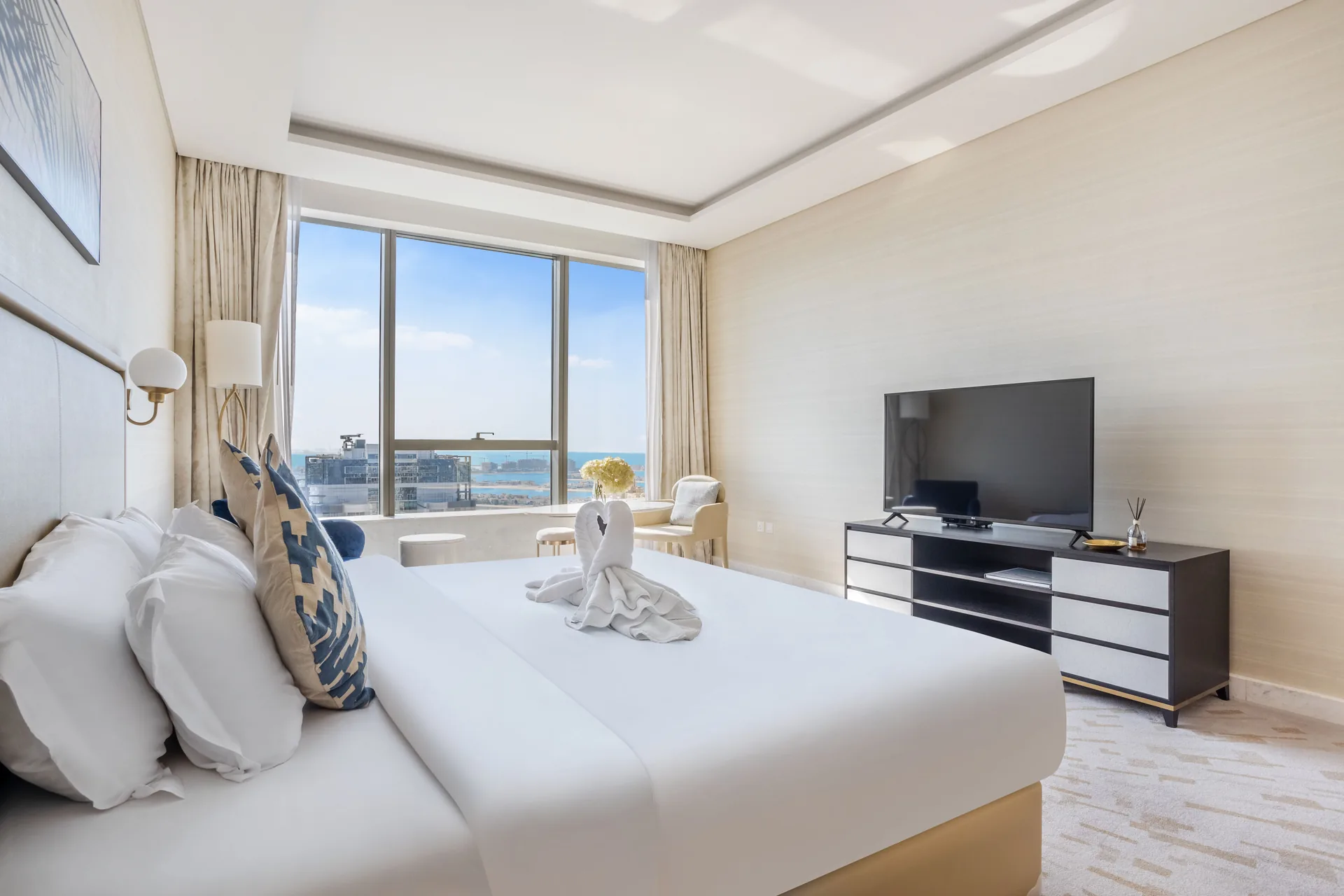
The right time for property photography depends on what the photographs need to show. Daylight can make rooms, materials and outdoor spaces easy to understand. Twilight can show a different side of the property, particularly when architectural lighting, a terrace or an illuminated view is part of its appeal.
For a Dubai listing, begin with the complete photo set you need. Then decide whether evening images add something useful enough to justify the extra planning.
When daylight is the strongest starting point
Daylight is often a practical choice for the main listing photographs. It can show the relationship between windows and living spaces, the appearance of finishes and the outlook from a balcony.
A daytime set is particularly useful for apartments and holiday homes where prospective occupants need to understand room arrangement, furniture, kitchen facilities and usable outdoor space. It also gives you a clear record of how the property looks during the day.
Bright sunshine does not automatically mean better interior photographs. Direct light may create strong contrast between a window and the room around it. The photographer needs to consider window direction, exterior obstructions, reflective surfaces and the angle of each composition.
When twilight adds value
Twilight photography is usually made during the short transition around dusk, when there is still colour in the sky and the property's lighting becomes more visible. The best moment changes with the season, weather and the view you want to capture.
It can suit a villa with considered façade lighting, a pool and terrace, or an apartment whose evening skyline is a genuine feature. A smaller selection of evening hero images may add more value than trying to repeat every daytime room angle.
Check the lighting before booking. Missing bulbs, uneven colour temperatures and lights that cannot be switched on can make the intended result harder to achieve. Twilight also needs reliable access to the chosen viewpoint at the right time.
Golden hour and twilight are different looks
Golden hour usually refers to warm, low-angle sunlight shortly after sunrise or before sunset. Twilight is the period before sunrise or after sunset, when the sun is below the horizon.
A sunlit balcony at golden hour will not look like a balcony photographed against illuminated buildings after sunset. Send the photographer a reference and describe the feature you want to show instead of using the terms interchangeably.
The schedule should follow the property. Nearby towers may block direct sunlight well before sunset, while another side of the building may still receive it.
Choose a plan that fits the property
An apartment with bright interiors and a modest balcony: Start with a complete daylight set. Add evening coverage if the view or lighting introduces a meaningful second impression.
A villa with a pool, garden and exterior lighting: Consider daylight for interior coverage and outdoor detail, with twilight reserved for selected exterior and terrace images.
A penthouse with a strong city outlook: Plan around the view as well as the rooms. Daylight and evening photographs may both be useful, but visibility, reflections and access need to be assessed in advance.
A holiday home with a tight changeover window: Prioritise clean, complete coverage of the rooms and facilities. If the available access does not suit twilight, discuss a separate session rather than rushing the main set.
These are starting points for the brief. The property's orientation, condition and marketing use should determine the final plan.
Prepare the details that light will reveal
Before the shoot, finish cleaning and styling. Check windows and balcony glass, make beds neatly, straighten curtains and remove temporary clutter. Turn on and test the lighting that will appear in the photographs.
Give the photographer:
- The address, property type and approximate size.
- Recent phone photographs of the main rooms and views.
- Window orientation, if known, and any surrounding obstructions.
- The features that must appear in the final set.
- Access times, security arrangements and rules for shared facilities.
- The intended listing channels, required image count and delivery date.
For evening coverage, confirm who can operate exterior lights and whether pools, terraces or rooftops are accessible. Keep someone available to resolve access issues while the light is changing.
Keep the finished photographs faithful to the property
Professional editing can balance exposure, correct colour and refine the presentation. It should still leave viewers with a reliable impression of the space, finishes and view.
If you are considering a digitally created twilight image, discuss it separately from an on-site dusk shoot. A virtual treatment may illustrate an evening look, but it does not document the actual lighting conditions at that time. Clearly identify material alterations where needed, check the destination platform's requirements and avoid creating misleading views or amenities.
For property marketing, a convincing image should also stand up to an in-person viewing.
Build the photo set around the listing
Daylight and twilight do not need equal space in the final gallery. Use the strongest opening image, then organise the set so the rooms, outdoor areas and important features are easy to understand.
Creative Lens's real estate photography service in Dubai includes planning around orientation, staging, access and final usage. If the layout needs more explanation, consider adding a Matterport virtual tour.
Share your property details with Creative Lens and say whether the priority is bright interiors, exterior atmosphere, the view or a combined set. That is enough to begin a useful conversation about timing and scope.
← Back to the Journal