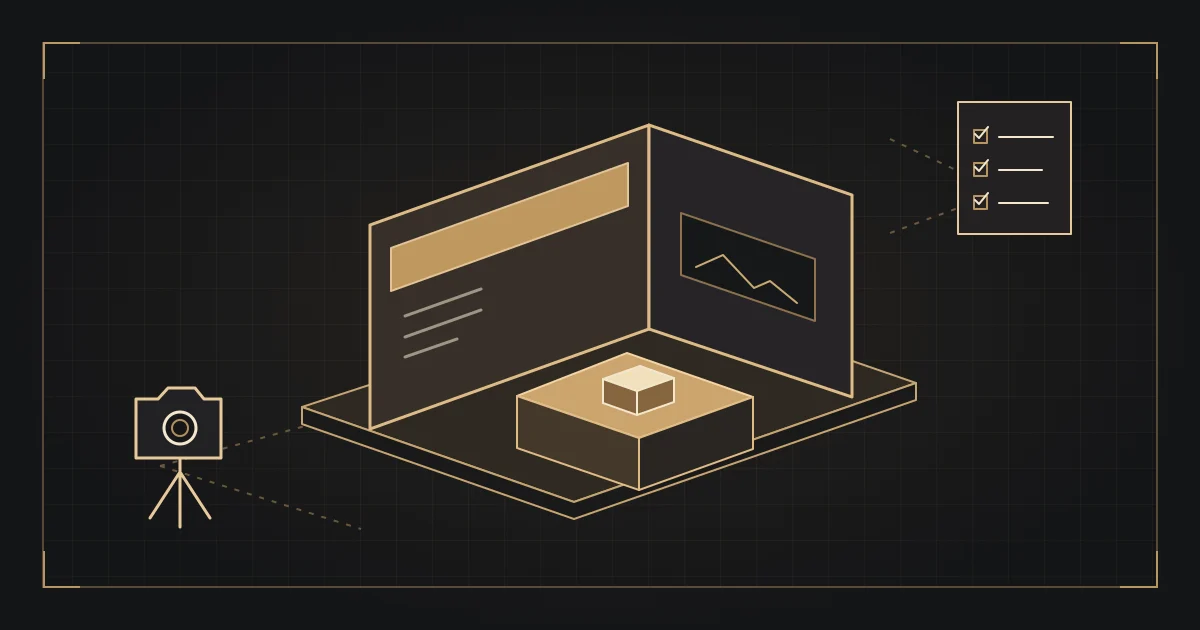
An exhibition stand looks its best at two different times: before opening, when every surface is clean and every sign is visible, and during the show, when visitors make it clear what the stand is for. Plan for both. A strong trade show gallery should show what you built, what people did there, and which moments your team can use afterwards. Start by telling your photographer who needs the images and what each team plans to do with them.
Build the shot list around three priorities
The stand itself. Before doors open, photograph the entire stand from the aisle and from an angle that shows its depth. Then move closer: the welcome desk, a consultation area, a product display, a screen and any sponsor branding that needs to be documented. Make one clean frame without people and one with the team in position. If the design includes illuminated signs or screens, check that the content is readable in a test shot.
The stand in use. Schedule a demo that shows the product in someone’s hands, not just on a plinth. Ask for a wide view that shows the crowd in context, a medium view of the presenter and a close detail of the interaction. Add customer conversations and staff answering questions. Ask your team to keep confidential screens, badges and documents out of these frames.
The people and moments you cannot repeat. Put executive visits, media interviews, announcements, partner handshakes and group photos on a timed list. Give the photographer names or reference photos where appropriate, the meeting point and a contact who can flag changes. If two priority moments overlap, decide which takes precedence or discuss a second photographer beforehand.
Make a coverage plan your team can use
Use the exhibitor run sheet rather than a separate list of vague “must-have” photos. For each priority, record the time, location, subject, destination and person responsible for approval. A short entry could read: “11:30, demo counter, prototype in use, one horizontal press image and one vertical social crop; marketing lead to approve.” Share the plan with the stand manager and photographer so that both know who can adjust it when the day changes.
Confirm photographer accreditation, access before opening and any restrictions with the organiser or venue. Flag embargoed materials, visitors who should not be photographed, and areas where flash or tripods are not allowed. Identify a fallback spot for group portraits away from aisle traffic. At large exhibitions, confirm the venue as well as the hall and stand number: the Dubai World Trade Centre and Dubai Exhibition Centre at Expo City are different locations.
Set delivery deadlines before the doors open
Treat priority selects and the final gallery as separate deliverables. If your communications team needs photos while the event is live, agree on a small first batch, its deadline and who can approve it. Specify a horizontal image with room for a headline, a vertical image for social and a clear sponsor frame if required. Decide whether the photographer should deliver finished crops or supply uncropped files for your designers. Confirm where files go and how an urgent edit request will reach the photographer.
For the final gallery, agree on how the folders should be organised. Sorting by stand, demos, speakers and sponsors is often more useful than a single folder in shooting order. Name executives accurately if captions are part of the handover. Confirm the publication channels, sponsor sharing and usage terms before the event, so the team knows which images can go straight into a press release, a sales deck or a partner recap.
Before you send the brief
Check that it includes the venue and stand number, early access time, three visual priorities, names and timings for unrepeatable moments, any restrictions and the deadline for first selects. If your team only has time to review one item, make it the timed list: it is far easier to add another angle of the stand than to recreate a visitor interaction or a keynote arrival.
See Creative Lens Media’s exhibition and corporate event photography portfolio. To discuss your next show, share your event brief with the venue, stand number and first delivery deadline.
← Back to the Journal